
Occasional bleeding of the gum around a dental implant after implant placement may cause many people to wonder, “Is there a problem with my implant?” However, not all bleeding around an implant has the same meaning. Sometimes it may be caused by a simple issue such as mechanical irritation of the gum, while recurring bleeding can also be a sign of an inflammatory process developing in the tissues surrounding the implant. Therefore, what matters is not only whether bleeding occurs, but also when it started, how often it recurs, and whether it is accompanied by other symptoms.
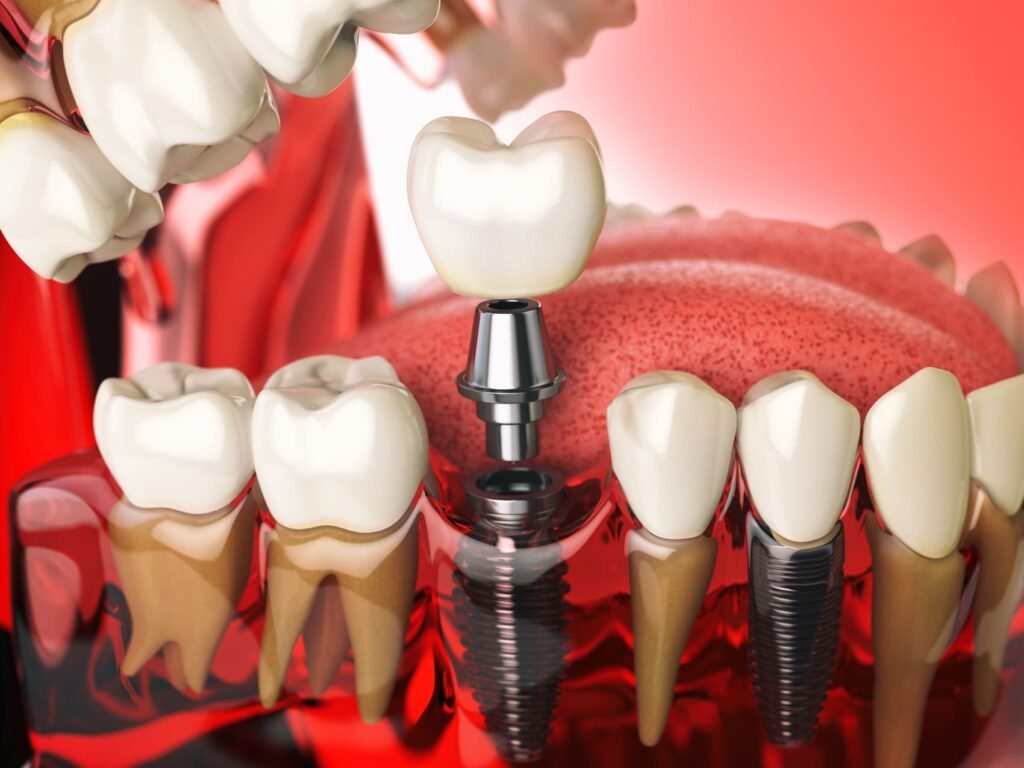
Why Can the Gum Around an Implant Bleed?
The gum surrounding a dental implant has a different structure from the gum surrounding natural teeth. If this area is not cleaned properly and regularly, the tissues may become sensitive and eventually start to bleed.
1. Plaque buildup around the implant
When food debris and bacterial plaque accumulate around an implant, the gum may become irritated. In particular, inadequate cleaning of the area between the implant and the gum can lead to redness, sensitivity, and bleeding during brushing.
For this reason, simply brushing your teeth normally may not always be sufficient in areas with dental implants. Interdental brushes, dental floss, or specialized cleaning tools recommended by your dentist may also need to be used correctly.
2. Mechanical irritation of the gum
Sometimes the problem is not caused by the implant itself, but by cleaning the area too aggressively. Using a hard-bristled toothbrush, applying excessive pressure while brushing around the implant, or using an unsuitable interdental brush can cause minor trauma to the gum.
In such cases, bleeding may occur particularly during cleaning.
3. Inflammation around the implant
Inflammatory conditions affecting the tissues around an implant are among the more important causes of bleeding. At an early stage, symptoms may include redness, swelling, and bleeding during brushing.
As the condition progresses, the tissues supporting the implant may also become affected. Therefore, recurring bleeding should not be ignored for a long time on the assumption that it will simply go away.
4. Food getting trapped around the implant
Food that repeatedly becomes trapped between the implant and an adjacent tooth can cause recurring irritation of the gum.
If you notice discomfort, a feeling of pressure, or bleeding in the same area, particularly after meals, your dentist may need to assess the implant-supported restoration and the contact points between the teeth.
5. Difficulty cleaning the implant-supported restoration
The design of the restoration placed on the implant is just as important as the implant itself when it comes to maintaining the health of the surrounding tissues.
If there are areas underneath or around the restoration that are difficult to clean, plaque can accumulate more easily. This may cause gum sensitivity and bleeding.
Therefore, the solution may sometimes involve more than simply brushing more frequently; the cleanability and design of the implant-supported restoration may also need to be evaluated.

Does Every Case of Bleeding Mean That the Implant Has Failed?
No. Bleeding of the gum around an implant does not, by itself, mean that the implant has failed.
The cause may range from simple gum irritation to localized inflammation. However, if bleeding continues to recur, particularly when accompanied by symptoms such as redness, swelling, bad breath, an unpleasant taste, or tenderness around the implant, a dental examination becomes important.
Can There Be a Problem Around an Implant Without Bleeding?
Yes. Problems around an implant do not always present with obvious bleeding. In some people, the symptoms can be quite mild.
For this reason, implant check-ups should not be limited to times when pain or bleeding occurs. Regular examinations help assess the condition of the tissues surrounding the implant and the implant-supported restoration.
What Should You Do to Reduce Bleeding Around an Implant?
Regular daily oral hygiene is important for maintaining the health of the tissues surrounding an implant.
• Brush your teeth regularly using the appropriate technique.
• Do not neglect cleaning around the implant.
• Use the interdental cleaning tools recommended by your dentist.
• Avoid brushing too aggressively or applying excessive pressure.
• Do not neglect cleaning your implant-supported restoration.
• Keep up with regular dental check-ups.
• If bleeding keeps recurring, seek professional evaluation rather than trying to manage the problem solely with home-care methods.
When Should You See a Dentist?
If the gum around an implant bleeds only once after particularly vigorous cleaning, the situation may be different. However, if the bleeding occurs repeatedly or becomes more frequent or severe, it should be evaluated.
You should consult your dentist if you experience any of the following:
• Persistent or recurring bleeding
• Noticeable redness or swelling of the gum
• Tenderness around the implant
• Bad breath or an unpleasant taste in the mouth
• Discharge from around the implant
• Discomfort while chewing
• A sensation that the implant or the restoration on the implant is moving
Because each of these symptoms can have different causes, the exact cause can only be determined through a clinical examination and, when necessary, appropriate imaging.
How Can Healthy Gum Around an Implant Be Maintained?
The long-term success of implant treatment depends not only on placing the implant but also on maintaining the health of the surrounding tissues afterward.
Proper daily oral hygiene, controlling plaque buildup around the implant, and regular professional check-ups are important parts of this process.
The goal is not simply to stop the bleeding, but to identify the factor causing it and protect the health of the tissues surrounding the implant.
Bleeding of the gum around an implant may sometimes be caused by simple irritation. However, recurring bleeding can also be one of the early signs of problems that may develop in the tissues surrounding the implant.
Remember: Caring for your implant is an ongoing process that continues after the implant has been placed. For a detailed examination and information about treatment costs, you are welcome to visit our clinic.