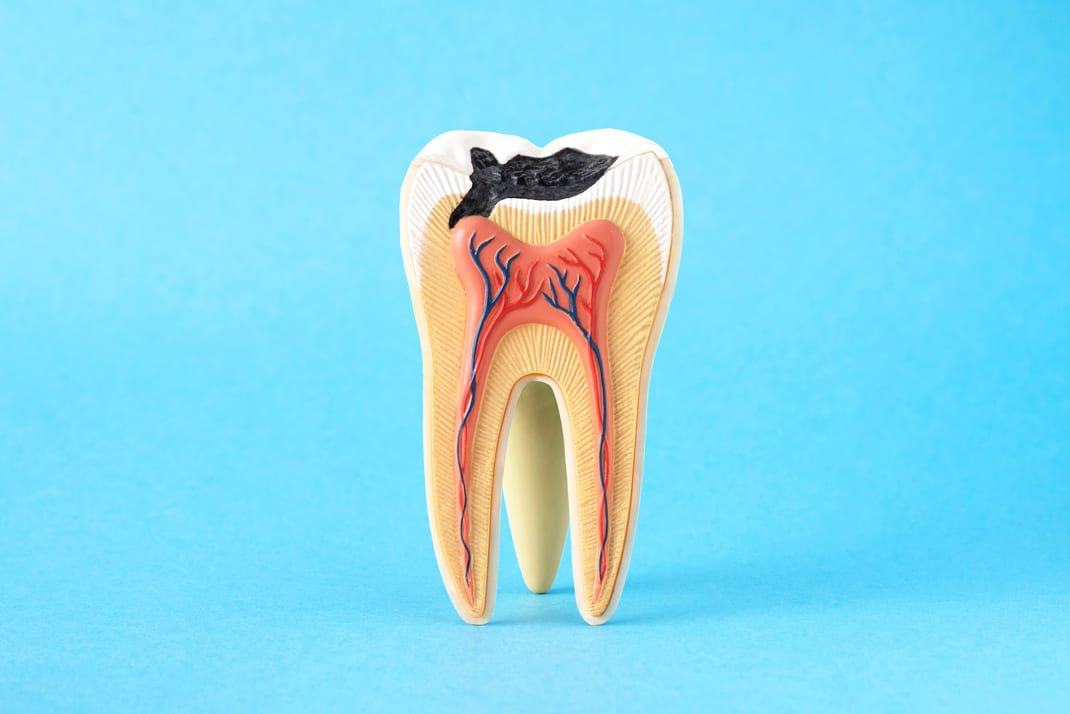


L'amputation dentaire chez l'enfant est une méthode de traitement conservatrice appliquée aux dents de lait ou aux dents permanentes nouvellement éruptées. Au lieu d'extraire la dent complètement, seule la partie problématique (généralement le nerf ou la racine) est retirée, dans le but de la conserver en bouche. En odontologie pédiatrique, cette approche est généralement utilisée dans le cadre d'interventions radiculaires, comme alternative à la pulpotomie ou à la pulpectomie.

Principe de base
L'objectif principal en matière de soins dentaires chez l'enfant est :
• Pour garder la dent en bouche le plus longtemps possible
• Pour maintenir ses fonctions de mastication, de parole et de maintien de l'espace
C’est pourquoi, contrairement aux adultes, l’extraction n’est pas immédiatement privilégiée ; seule la partie problématique de la dent est enlevée, tandis que la partie saine est préservée.
Dans quels cas est-ce préférable ?
• Lorsque le nerf est atteint en raison d'une carie avancée
• Lésions du tissu nerveux suite à un traumatisme
• Infection d'une des racines des molaires primaires
• Situations où un traitement canalaire complet ne peut être appliqué
• Cas où la conservation de la dent en bouche est importante
Procédures appliquées (Types d'amputation chez l'enfant)
1. Pulpotomie (la plus courante)
• Le tissu nerveux de la partie supérieure de la dent est retiré.
• Les tissus sains des racines sont préservés
• La dent conserve sa vitalité
Il s'agit de la procédure d'ablation partielle la plus couramment pratiquée chez l'enfant.
2. Pulpectomie (dans les cas plus avancés)
• Tous les tissus nerveux sont retirés
• Les canaux radiculaires sont obturés
À privilégier lorsque l'infection a progressé.
3. Amputation radiculaire (plus rare)
• Appliqué aux dents primaires pluriradiculées
• Seule la racine problématique est supprimée
• La partie restante de la dent est conservée dans la bouche
Étapes de la procédure
1. Un examen et une radiographie sont effectués.
2. Une anesthésie locale est appliquée (l'enfant ne ressent aucune douleur).
3. Les tissus nécrosés sont retirés
4. La pulpe ou la partie de la racine malade est retirée.
Cinq matériaux de guérison sont appliqués
6 La dent est restaurée (souvent soutenue par une couronne en acier inoxydable).
Processus de guérison
• Généralement rapide et sans incident
• Une légère sensibilité peut survenir pendant les 1 à 2 premiers jours.
• L'enfant reprend rapidement une vie normale

Pourquoi est-ce si important ?
Parce que les dents de lait :
• Maintenir de l'espace pour les dents permanentes en dessous
• Si l'extraction est précoce, des déplacements et un encombrement dentaire peuvent survenir.
• La mastication et la parole peuvent être affectées.
Par conséquent, l'amputation est une approche beaucoup plus conservatrice et avantageuse que l'extraction.
Éléments à prendre en compte
• Une bonne hygiène buccale doit être maintenue.
• Il ne faut pas négliger les examens dentaires réguliers.
• La dent traitée doit être surveillée.
En bref
Amputation dentaire chez l'enfant =
« Une procédure qui permet de sauver la dent en retirant uniquement la partie problématique sans la perdre complètement. »
Informations sur le prix d'une amputation ?
Le coût d'une amputation peut varier en fonction de l'état de la dent.