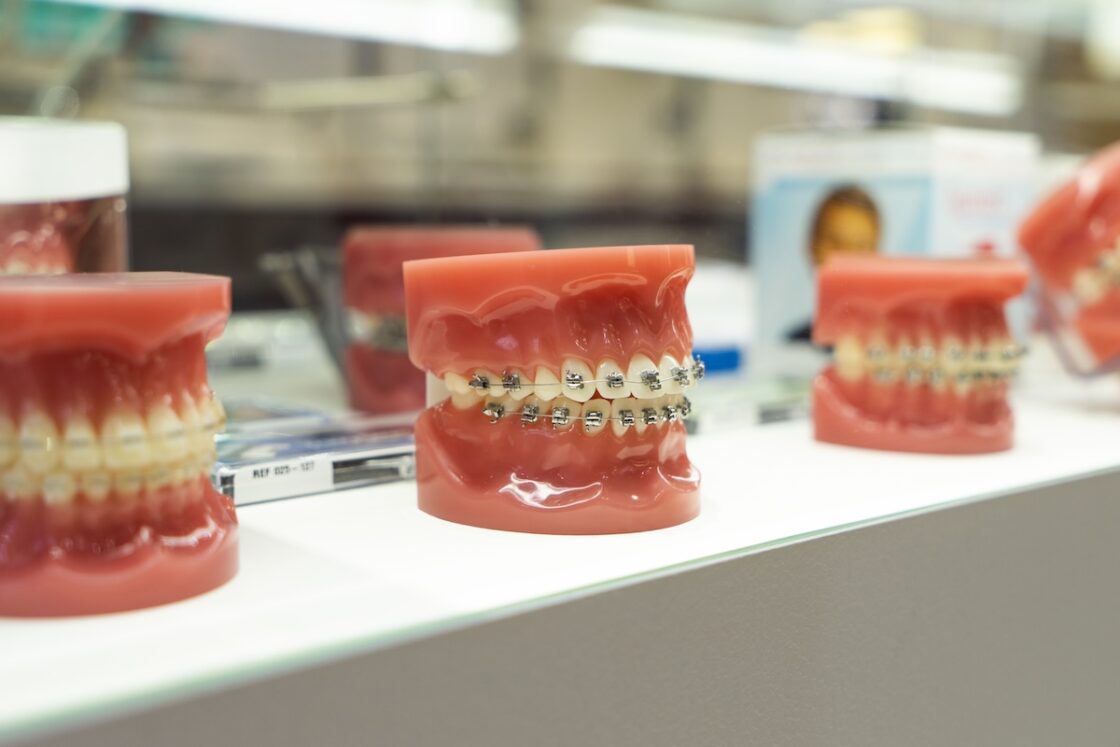


Composite laminate treatment is a dental procedure performed to improve the aesthetic appearance of teeth. In this procedure, a special composite filling material is applied to the front surface of the teeth to make them look more aesthetic. It is especially preferred to correct small problems related to tooth color, shape, size, or alignment. In dentistry, it is considered a minimally invasive procedure, meaning that the intervention on the tooth is kept to a minimum.
The main goal of this treatment is to achieve a more harmonious, whiter, and more aligned smile while preserving the natural tooth structure as much as possible. During the procedure, special light-curing composite materials are applied to the front surfaces of the teeth. The dentist carefully shapes this material to match the natural form of the tooth and creates an aesthetic appearance suitable for the natural structure of the teeth. As a result, the teeth gain a more symmetrical, healthier, and more aesthetic appearance.
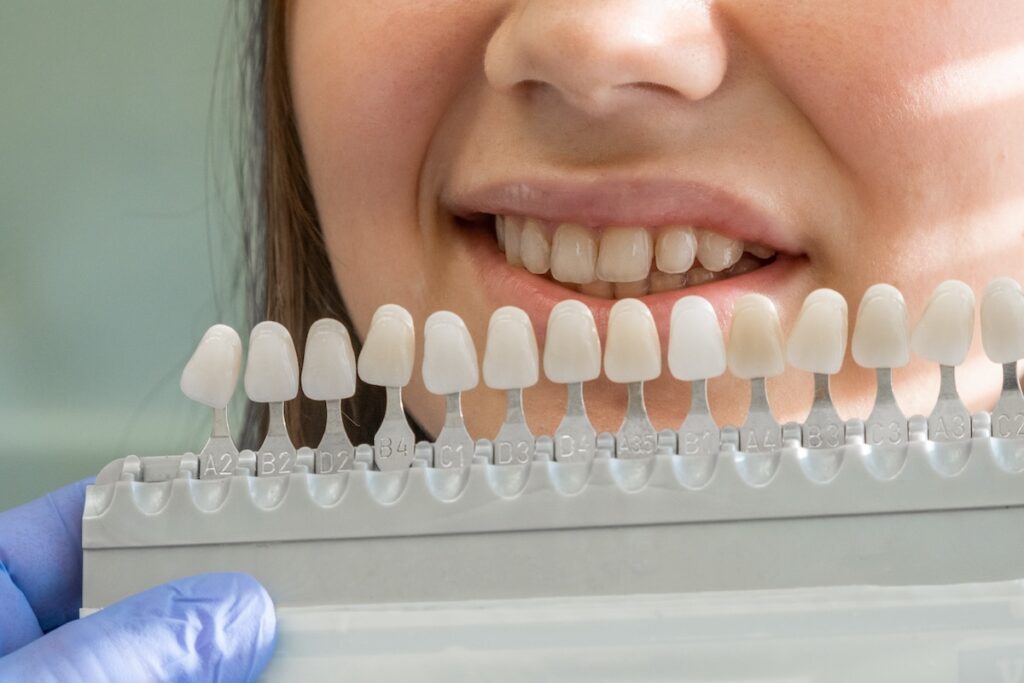
Composite laminate treatment can be applied to many aesthetic dental problems. It is especially preferred for discoloration and yellowing of teeth, closing gaps between teeth known as diastema, repairing broken or cracked teeth, situations where teeth appear smaller than normal, correcting shape irregularities, masking mild crowding, and when an aesthetic smile design is desired. It provides a very effective solution for minor aesthetic problems that do not require orthodontic treatment.
Composite laminate treatment is usually completed in a short time and can often be performed in a single session. The treatment process consists of several stages.
In the first stage, examination and planning are carried out. At this stage, the dentist evaluates the patient’s oral and dental structure in detail. The color and alignment of the teeth, gum health, and smile line are examined. At the same time, the patient’s expectations are listened to and the desired aesthetic result is planned. In some cases, photographs may be taken and a smile design plan may be created.
In the second stage, the tooth surface is prepared for the application. In composite laminate applications, tooth reduction is usually not required or only minimal roughening is performed. This process helps the composite material adhere better to the tooth surface. Then the tooth surface is cleaned with special solutions and prepared for application.
In the third stage, acid etching and bonding application are performed. A special gel is applied to the tooth surface to slightly roughen it. This process helps the composite material bond more strongly to the tooth surface. Afterward, an adhesive substance called bonding is applied and hardened using a special light device.
In the fourth stage, the composite material is applied to the front surface of the tooth. The dentist places the composite material in layers and each layer is hardened with a special curing light. During this process, the dentist carefully shapes the material to imitate the natural anatomy of the tooth. Thus, the tooth gains a smoother, more aesthetic, and more harmonious appearance.
In the final stage, shaping and polishing procedures are performed. After the composite application is completed, the surface of the tooth is given its final shape using special burs and discs. Then polishing is performed. Thanks to polishing, the tooth surface becomes shinier, smoother, and gains an appearance very close to a natural tooth.
Composite laminate treatment has many advantages. One of the most important advantages is that the procedure can usually be completed in a single session. Since very little tooth structure is removed or none at all, the natural tooth tissue is preserved. In addition, it is more affordable than porcelain laminates. If damage or fracture occurs, it can be easily repaired. It provides an aesthetic appearance very close to natural teeth and is generally a painless procedure, so anesthesia is usually not required.
However, composite laminates may also have some disadvantages. Over time, color changes may occur. Compared to porcelain laminates, their durability is slightly lower. There may be a risk of fracture if very hard foods are consumed. In addition, regular care is necessary to maintain their shine and aesthetic appearance.
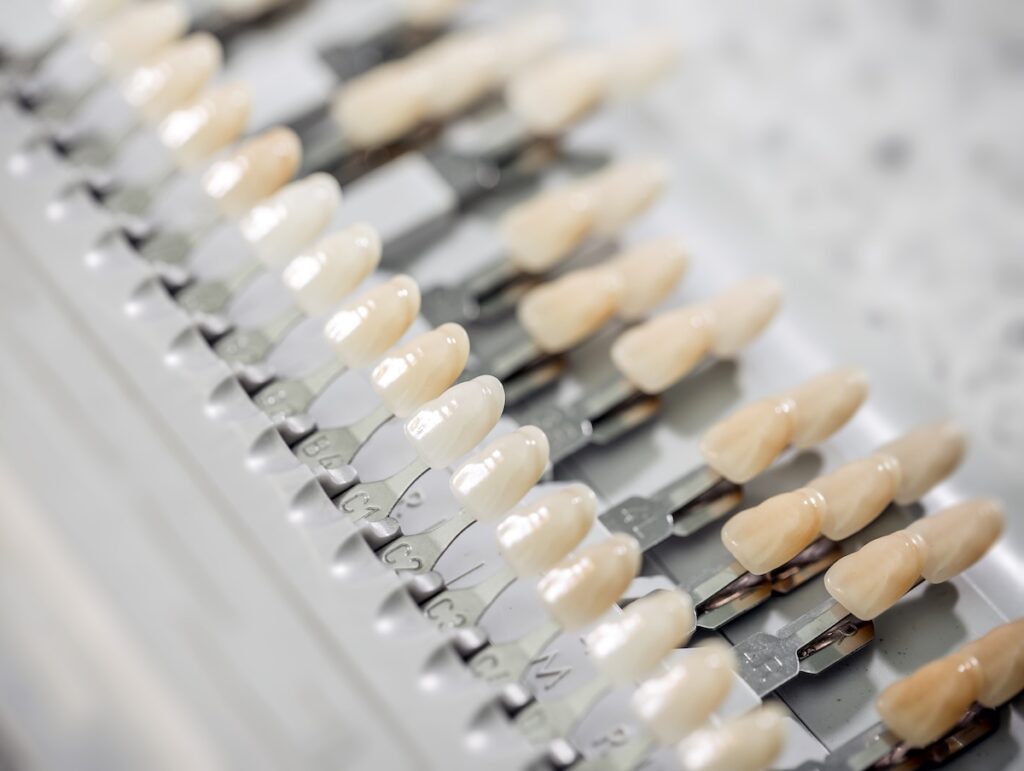
The lifespan of composite laminates usually varies between 4 and 8 years. This period may vary depending on the person’s oral hygiene, teeth grinding habits, and dietary habits. With regular dental check-ups and good oral hygiene, this period can be extended.
After the treatment, certain points should be considered to ensure that the laminates remain healthy for a long time. Avoiding breaking hard foods with the teeth, quitting habits such as nail biting or chewing pens, brushing the teeth regularly, using dental floss, reducing coffee, tea, and smoking consumption as much as possible, and visiting the dentist regularly will help extend the lifespan of this treatment.
As a result, composite laminate treatment is one of the modern methods in aesthetic dentistry that improves the appearance of teeth quickly and effectively. While making the color, shape, and alignment of the teeth more aesthetic, it preserves most of the natural tooth tissue. Since the application can be completed in a short time, has a lower cost compared to other aesthetic treatments, and can be easily repaired when necessary, it is a frequently preferred treatment among aesthetic dental procedures.
Since it is a smile design procedure, it is customized for each individual. In order to receive exact pricing information, you must have a dental examination.