
Dental implant and bridge treatments are two completely different methods preferred by dentists to replace missing teeth. Both treatment options restore the missing tooth area. After a detailed examination and proper treatment planning, both procedures can be used successfully for many years. However, patients who experience tooth loss often feel unsure about which option to choose.
Following a detailed clinical examination, X-ray and/or tomography evaluation, our dentists determine which treatment is more suitable for the patient. Both methods have their own advantages and disadvantages.
WHAT IS A DENTAL IMPLANT?
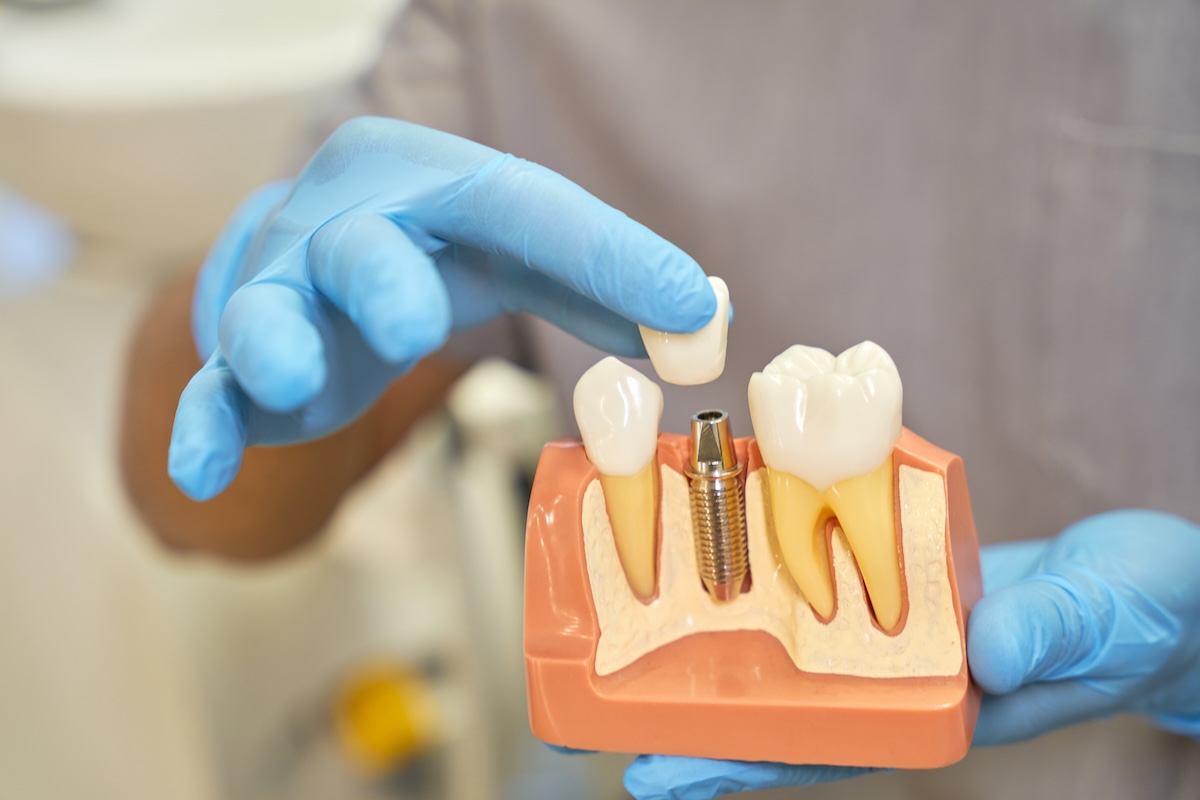
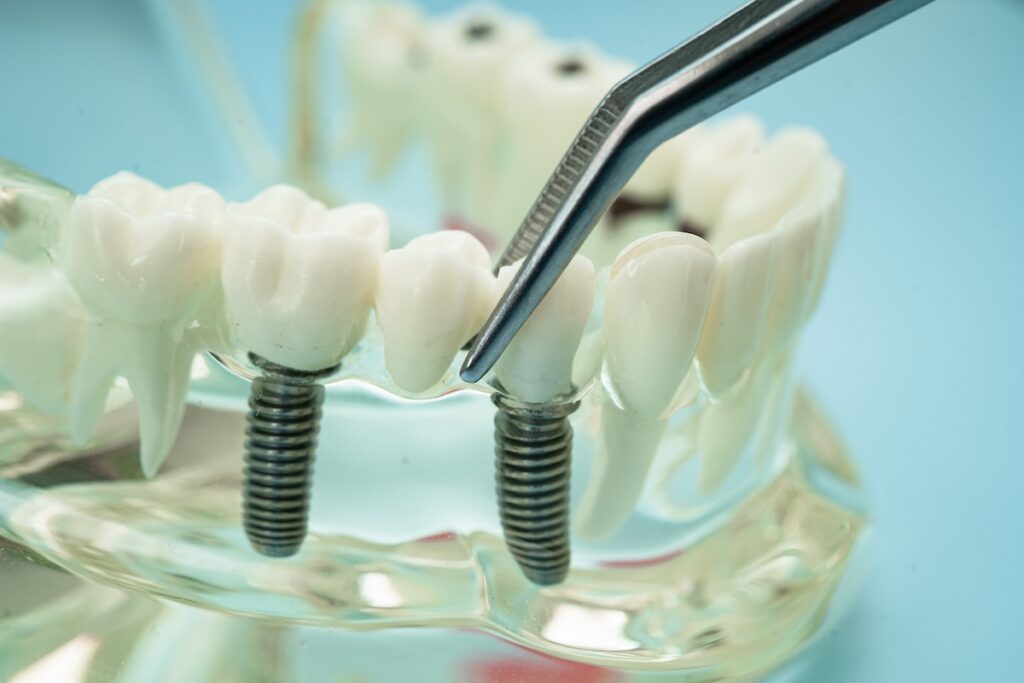
A dental implant is a treatment method in which titanium screws are placed into the jawbone to replace the missing tooth root, and dental crowns are attached on top. This allows the missing tooth to be restored without damaging the neighboring teeth.
Implants provide a permanent, long-lasting solution with the comfort and appearance of natural teeth.
Advantages of Dental Implants:
• Neighboring teeth are not reduced
• Provides a natural tooth feel
• Long-lasting
• Prevents bone loss
• Offers a highly aesthetic and natural appearance
Disadvantages of Dental Implants:
• Requires a surgical procedure
• Treatment duration may be longer
• Higher cost
• Additional surgical procedures may be required if bone volume is insufficient
WHAT IS A DENTAL BRIDGE?
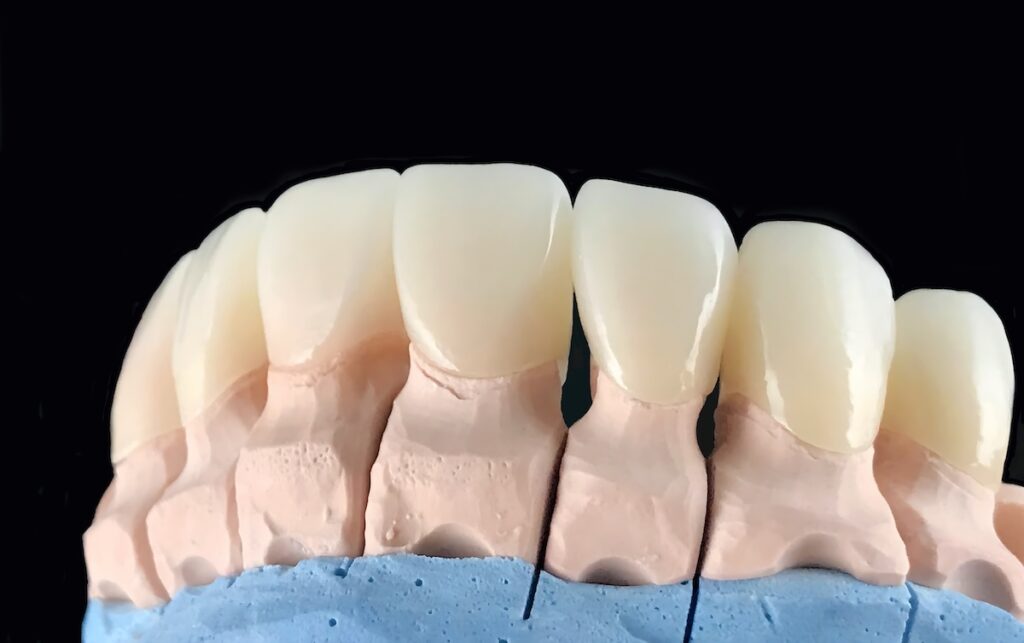
A dental bridge is a fixed prosthetic solution that replaces a missing tooth by using the adjacent healthy teeth as support. Crowns are placed on the neighboring teeth to anchor the bridge. Since the adjacent teeth must be reduced, healthy teeth are affected during the procedure.
Bridges restore chewing function and provide an aesthetic appearance. They offer a fixed and reliable solution for missing teeth.
Advantages of Dental Bridges:
• Does not require surgery
• Shorter treatment and recovery time
• May be the only option if bone structure is unsuitable for implants
• More cost-effective
Disadvantages of Dental Bridges:
• Healthy teeth may need to be reduced
• Reduced teeth may develop sensitivity or decay over time
• Since there is no root support, gum recession may occur
• Not as long-lasting; replacement may be required over time
WHICH TREATMENT SHOULD BE CHOSEN?
The choice depends on:
• The location of the missing tooth
• Bone structure
• The patient’s overall health
• Financial considerations
If the patient prefers a long-term solution, has sufficient bone structure, is in good general health, and is comfortable with a surgical procedure, implant treatment may be the best choice.
If faster results are desired and adjacent teeth already require crowns, a bridge may be a practical option.
Both implants and bridges are effective solutions for missing teeth; however, implants are the closest option to natural teeth and offer long-term advantages for both bone and dental health.